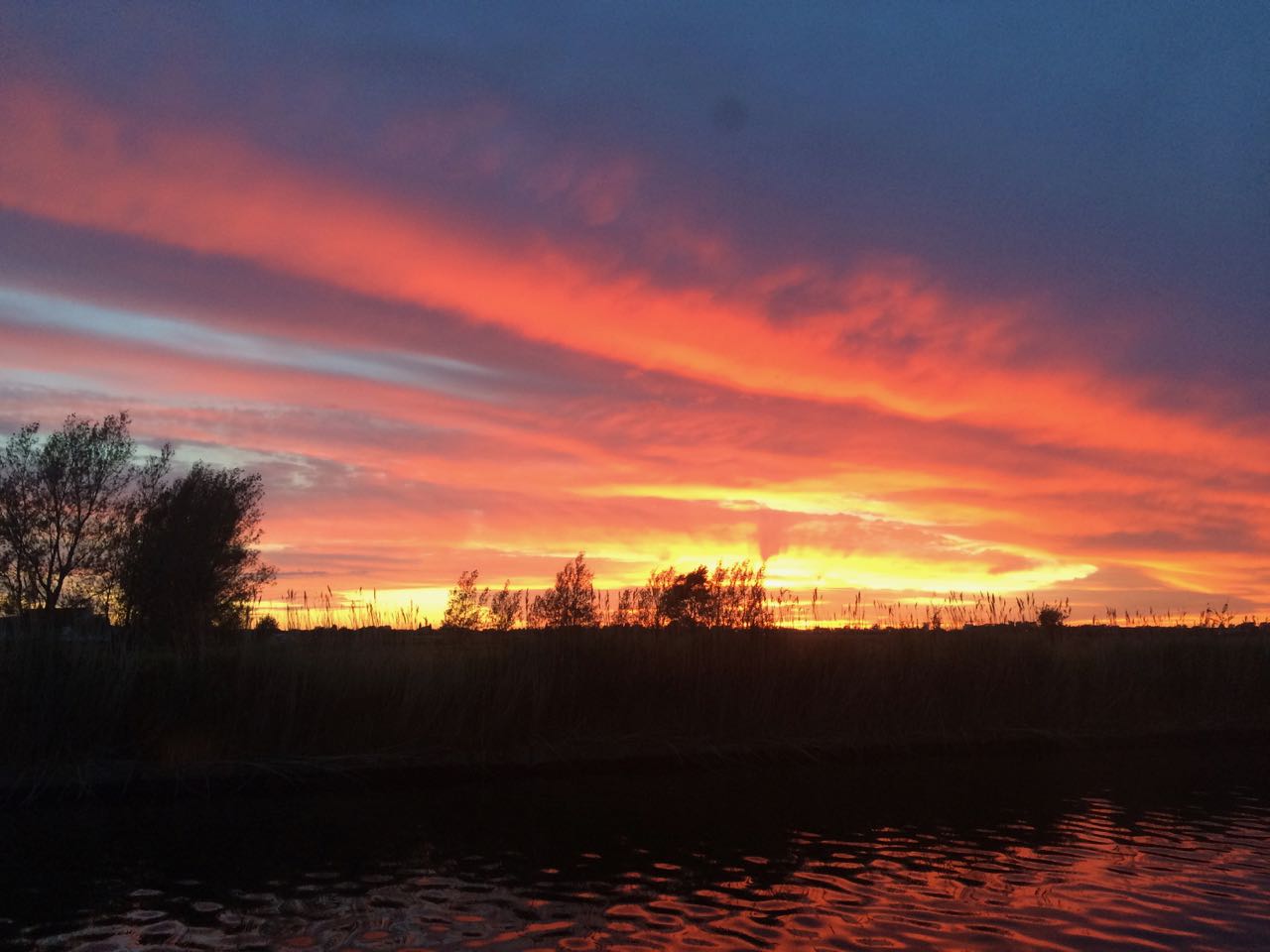
Canal du Centre

Canal du Centre

Saturday, June 10, 2017

A Trip to the Beach, June 1

Our plan was to spend a couple of days in Veurne, then head down through Dunkirk to the town of Bergues in France. We’d heard it was a beautifully preserved medieval town and just a days travel away. After the visit there, we’d head back to Veurne on Monday for the Bloomenmarkt, a big garden show in the main plaza, then head back to Brugges for a couple of days. Then it would be on to Ghent where we’d receive our first guests of the year, Cathy Jo’s brother Brandt and his new wife, Susie.

Thursday was a beautiful day for a bike ride so we set off from Veurne for the beachside town of Nieuwpoort. On the way, we passed Plopsaland, a giant amusement park with rollercoasters and the usual accouterments. In the high summer months it must be packed but for now not many people were around despite the perfect weather. We thought maybe we were back in southern California; sunny, warm, dry and just a little wind from the northwest. Nothing like we imagined a North Sea beach should be.
This is really not your Southern California beach, though. Lined with high rise apartment buildings and the sand divided up into privately controlled bathing areas, our Coastal Commission would have a heart attack.


Pretty quiet on a Thursday morning in early June.


After a quick lunch and a beer, we cycled the 10.5 kilometers back to the boat down the Nieuwpoort-Dunkirk Canal. We would travel it our way back up the coast after the quick run down to France. Friday morning off we went.

Thursday, June 8, 2017

Canal and River, The Ijzer Loop, May 27-31

We managed the 3 bridges and 1 lock out of Brugges without too much complication. Three of the boats in our convoy left to head north toward Zeebrugge and that left us and two other boats, Dutch cruiser types, headed for the coast at Oostende. As usual, we were the slowest of the group but the last two bridges on the canal waited for us to catch up and we entered the Plassendale-Nieuwpoort canal a little after noon. Constructed in the mid 17th century, the canal, along with the connected Nieuwpoort-Dunkirk canal, provided an inland waterway connecting the two sea ports of Oostende and Dunkirk (Plassendale is just east of Oostende). Since neither canal has been upgraded to current commercial standards, only pleasure boats use it now. And use it they do. Last time we were here we even made a note in the log asking where all the boats were. This time there’s no question. Not too many headed in our direction but bridge openings had produced long lines of boats (15-20) headed in the other direction. There’s a busy hireboat base in Nieuwpoort that contributes to the traffic.

The EU has made a major commitment to encouraging water recreation in the area, supplying funds for several small free haltes along the waterway, much used by the hireboat fleet. Just 15 minutes after entering the canal we were tied up at the pontoon in Oudenburg. Room for several boats with free water and electricity and the town (with a supermarket!) just a 5 minute bike ride away.
We did a small shopping and then settled in the the night, chatting with an English family just setting off on their week-long charter vacation and enjoying a spectacular sunset.


After our usual 10 am departure (that’s when the bridges start operating on Sundays) we headed down the canal to the junction with the Ijzer River in Neiuwpoort. As we did in 2008, we planned to make the loop up the Ijzer then north on the Lo canal to Veurne, although this time we’d skip the bike ride to Ypres and concentrate on the mooring at Fintele with a bike trip to the St. Sixtus Abbey brewery (best beer in the world!) and dinner at Heberg de Hooipiete, which was closed the day we were here before. 

Sunday night saw us tied to the bank next to De Dodengang, the Trench of Death, one of the many memorials to the tragedy that was World War I, many of the bloodiest battles being fought in this area.
We just pulled over to a curb along the canal and looped our mooring lines around the posts holding the guardrail along the small road beside the canal. After dinner, a gentleman was looking over the guard rail telling us we had a “mooi boten,” a nice looking boat. When we told him we were better at English than Flemish (!), the conversation began. He ended up inviting us and Bruce and Jeanine, a Canadian couple we’ve been tag teaming with since Brugges and who had pulled in a little after us, up to his house just across the road to sample some local beers. He said we were “neighbors for one night.” Just being neighborly!
Tom and Vera (I’m sure I’m mangling their names but oh, well…) had restored an old farmhouse, raising the roof and adding a second story so the huge picture window in the back looked out over the fields, resulting in a view that changes with the seasons. Vera said they wanted to sleep downstairs but live upstairs. And we tasted more great Belgian beers.

The walkway to the front door crosses a koi pond “moat”.
You can see our stern line in the grass.

Monday morning we set off up the river through Diksmiude to our ultimate destination, Fintele. The marina in Diksmuide was still packed from the holiday weekend with several big ocean-type yachts. There was barely room for us to squeeze by to continue on. It was just a couple of hours, though, to Fintele and there was plenty of room on the pontoon, just one other boat, a 1913 restored tug boat that we’d seen in Gerardsbergen, where it lives.

Since the restaurant was open Monday night and closed Tuesday and Wednesday, we took advantage of the opportunity to try their specialty, river eel. We weren’t sure what to expect, thinking of eel as something slimy and ropy, but this turned out to be delicious. Lots of bones, but the meat is very firm and white and it came with a plate full of frites. We even had seconds!

This is a picture of the restaurant from 2008. It looks just the same.

Thursday is was pretty windy but beer was calling. We set out for Westvleteren to score more of the famous St. Sixtus Abbey beer. This time we had the very fine Belgian cycling map instead of the road atlas for navigation. That made the trip much less stressful. We bought some beer (duh!), this time all that was available was the 12 per cent, which is delicious, not sweet like some of the other really strong beers, and some abbey cheese. We had lunch at the cafe and headed back to the boat.

Wednesday morning we were off through the Fintele sluis and the 5 opening bridges on the Lo Canal. Just a little after 1:30 we were tied up in Veurne.


Wednesday, May 31, 2017

In Bruges, Part 2

We could write a million words about the architectural beauty of this city; others have. We could post a hundred pictures of elegant building and soaring towers. We’ve posted a few before. But, really, you should come see it for yourself!

Friday morning we set off for the Groeninge Museum. We’re big fans of the Flemish primitive painters from the 15th and 16th centuries but why they’re called primitive is a mystery. This area was fabulously wealthy from the cloth trade in that era and the beautifully detailed oil paintings are a wonder.


Here’s a detail from a larger work about St. Nicholas, the patron saint of bargees by van de Lucialegende. 
Notice the guy sampling the cargo. A true boater!

After lunch it was off to the Gentpoort, one of the old city gates turned into an educational display about the history of the city’s defenses. Our trip to the roof was timed perfectly to watch a large commercial barge travel through the lifting bridge.


Turning the other way was a good view of a couple of the city’s many towers; the Saint Magdalene’s Church in the foreground and the Belfort behind.


After that is was general wandering about the streets, enjoying a beautiful day.

And of course, the famous Belfort.


One of the very nice things about the Coupure mooring is it’s calmness (and the discount we get as newly enrolled members of the Vlaamse Pleziervaart Federatie). As might be expected, the center of the city is mobbed by tourists, especially on this long holiday weekend. We think northern France emptied out for a few days. Luckily, the Coupure is just a couple of blocks off the tourist track. It’s very peaceful but just a couple minutes walk from the city sites. It’s also a very nice neighborhood.

A block of houses fronting the Coupure, just down from our mooring spot.

Not to say there wasn’t a bunch of activity in the harbor. With the long weekend there was much coming and going. When we arrived on Tuesday there were only about 6 boats but by the weekend the harbor was chock full.

That evening we enjoyed a very nice meal at a small restaurant just off the main Markt square. De Stove is a very small room, maybe 20 seats, with the wife running the front of the house and the husband in the kitchen. Some very interesting menu choices and a widely varied, reasonably priced wine list. Highly recommended!

Saturday morning at the ungodly hour of 9 am we pulled away from the dock and out under the bridge back into the Ghent-Oostende Canal. We would have to negotiate 4 bridges and a lock (it’s oval!) in the company of 6 other boats before we left the city for our next stop on the Plassendale-Nieuwpoort Canal.


Tuesday, May 30, 2017

In Bruges, May 22-27, Part 1

I used that post title on the Odysseus blog back in 2008 but if it reminds anyone to rewatch that great movie (we did!) then my job here is done.

11:30 am we left the Dendermonde lock and entered the Schelde, hurtling downstream (well, at about 6 mph) toward Ghent. Just about 2 o’clock the doors of the Merelbecke Lock opened and we had left the tidal part of the river, entering the Ringvaart, the canal that “rings” Ghent. Just before 4 we left the canal and entered the arm of the Leie River that flows through the middle of Ghent. When we come back in a couple of weeks we’ll actually travel into the center but for now we were heading on to Bruges so we stopped at one of the three yacht clubs on the river just off the Ringvaart.

The KGWV is in a beautiful setting with the river slowly flowing by grassy tree-shaded banks. This club’s mooring are alongside the canal, the others are mostly on finger pontoons. But it’s loud and surgy! Big commercial barges go speeding by the narrow entrance to the river resulting in alot of wash, the boats dancing around and stretching out lines. The very noisy ring road and two railroad tracks surround the space. Luckily we’d only spend one night.

9 am Tuesday morning we reentered the Ringvaart and about 1:30 pm started through the three opening bridges that would bring us to one of our favorite moorings, The Coupure in Bruges. By 3 we were secured in the small arm off the main canal. We made the short walk into town to visit the tourist office where we learned that we had arrived just in time for a big four-day holiday. The town celebrates Ascension Day with the Procession of the Holy Blood and that would take place on Thursday. We were just in time!

Wednesday was chores day as we had the Holy Trinity:power, water and sun. Laundry and general cleanup were called for. We also met Hans and Jannie on theDolphijn, moored just behind us. From very northern Netherlands, they had sold their tour boat business, keeping and refitting out the smaller boat (about 15 meters) and were headed for the warmer climate of southern France.

Legend has it that in 1150, after the second Crusade, Thierry d’Alsace, Count of Flanders, brought the relic of the Holy Blood of Jesus back from Jerusalem and placed it in the Basilica on the Burg, the main square in Bruges. Now, every year on Ascension Day, a procession winds it’s way through the central city with marching bands, the many different town guilds in their finery and several “tableau,” scenes from the Christian story played out by the citizens along with “floats” of horse drawn wagons.

Church services begin  around 11 am, the procession starts at 2:30 pm and ends at 6, taking an hour and a half to pass any particular point. There were lots of horses, sheep, goats, a few donkeys, a couple of camels and lots and lots of people.


“Jesus” tells the children to come to him.


This Jesus is riding into Jerusalem on a donkey with many palm frond waving followers.


Barabas awaits his fate followed by
a phalanx of Roman soldiers.


I missed a picture of the guy riding the horse carrying the actual Relic because a bunch of people were standing in the way!

And finally, the mobile carillon appears to send the crowd off in good spirits!


We think all of Belgium was sold out of wigs and bronze makeup because there were alot of “swarthy” people in that parade.

We were off to find a beer, not hard to do in Belgium.

Friday would be culture day. Saturday morning we’d be off.


Friday, May 26, 2017

Geraardsbergen and Back May 17-22

Leaving Ninove about 10 on Wednesday morning we were through the lock just above town by about 20 after and entered the Dender Valley. “Valley” indicates hills and, voila! there was elevation! We had seen a little uphill and down on our bike ride to Aalst but now we were doing some serious twisting and turning through the Belgian woods.


After 1 more lock and two opening bridges (waiting for us as we were the only boat moving on the river), by just a little after noon we were tied up on the pontoon between the two opening bridges in Geraardsbergen, “The oldest town in Flanders.” In 1068 the town received it’s charter from the Count of Flanders, granting it’s citizens many rights, including personal freedom, an unusual gift in those days. The town grew continuously with the increasing cloth trade, then in the 19th century it became the center of the creation of chantilly lace, reaching a worldwide market. More recently, there was a huge matchmaking company, Union Match, and cigar making. 

Geraardsbergen main shopping street.

A nice butcher, a couple of bakeries, a medium sized supermarket and the usual tidy shops and houses on cobblestone streets. It’s a vey pleasant town.

You may also have heard of the “Mannekin-Pis,” the fountain in Brussels. Well, maybe not. Anyway, the citizens of Geraardsbergen lay claim to having theirs first. This Mannekin-Pis was made in 1459, 160 years before the one in Brussels. That’s their story and they’re sticking to it!
We especially like the small “No drinking water” sign on the railing.

Now the town is most notable for it’s part in the Tour de Flanders bicycle race and it’s brutal climb up the “Muir,” a cobblestone track up a 20% grade that thins out the peloton.

It’s also famous for mattentaart, a local pastry that was the first Flemish regional product protected under European regulations. They really are pretty good.

There’s also a really sweet municipal museum, admission €1.25 each, with rooms dedicated to the match company (with a zillion matchbook covers), the tobacco industry, chantilly lace and the Concordia Brewing Company, one of the first industrial sized breweries in Belgium. The guy at the desk in the museum was very happy to give us a personalized tour.

We had a really good pizza dinner at an Italian restaurant called “Arte” and just generally enjoyed the town.

The sun goes down on the Geraardsgergen Haven.

Major reconstruction was taking place on the next lock right on the edge of town, so it’s operating hours were restricted to early morning, noon and evening and, since the river was closed due to more construction just a little further on, this was the furthest south we’d get on the Dender. Friday morning we turned around and passed back through the Wijngaard Bridge but only traveled about 3 1/2 k to the “marina” (complete with what look like abandoned boats, a feature of the river, it seems) in the regional park at De Gavers. It’s a huge lake with walking and bicycling paths, campground, cabins, a swimming beach and bike and boat rentals; a huge summer holiday camp. Being late May, however, the place was basically deserted; a few people jogging and walking the paths and a few in the cafe. We managed the 5 k walk around the lake back to the boat just before a big rainstorm.
Saturday morning it was yet another 10 am departure through 3 locks and 3 bridges to the pontoon in Denderleeuw, the “Schipstrekkers koesteren.” A small village with a big church, in the olden days before engines, when barges had to be towed by people or horsepower, this village halfway between Dendermonde and Ath was the home of the men (and some women) who hauled the barges.
Another 10 am departure Sunday morning took us through 3 more locks and 3 more bridges to the pontoon we were unable to stay on last Saturday. We had it all to ourselves. We’d be reentering the tidal Schelde on Monday morning and to get the proper current we didn’t want to get there until 11 am. We visited the Monday market in Dendermonde again and by 11:30 were back on the Schelde, zooming our way towards Ghent.


Things are a little busier in the square on market day.


Monday, May 22, 2017

The Dender, Or We Come To Terms With Out and Back

Our original plan for the early part of the summer was (you can follow along on the Belgium Canal chart on the sidebar) to travel south on the Dender from Dendermonde to the Blanton-Ath Canal, turn west and north on the Nimy-Blanton-Perrones Canal to the Escaut then cut across to Kortrijk and north to Ghent. However, plans being jello and all, just before we left Stevensweert we were informed that the upper reaches of the Dender above (south of) Geraardsbergen were closed until the first of July due to construction, and the through route was unavailable. We debated just giving the Dender a pass but decided we would embrace the out-and-back; head to where we couldn’t go any further, then turn around and head back to the Schelde. 
Saturday evening about 5 pm we cleared the first lock onto the Dender, hoping to spend the night at a pontoon just a couple of k up the river. We found it full so headed further on to the next lock (Denderbelle), only to discover it closed at 6 pm. We were about 5 minutes late and the lockkeeper had already left. Luckily there was a set of posts right before the lock for waiting. We’d be waiting until the morning so we tied up. Sunday the locks don’t open until 10. There was a large commercial barge above the lock. One of the surprises of the lower reaches of the river was the amount of commercial traffic. There are several big industrial operations around Aalst that draw a couple of barges a day. Once he was through, we locked up and tied up on the wall after the lock. It’s free, a nice spot and we were just a 5 k bike ride from Dendermonde. Since it was only 10:30, we did a few chores, had lunch and then biked into town.


The main square in Dendermonde
Very quiet on a Sunday afternoon.
Not so on Monday morning. It would be packed!

The very nice new tourist office opened just as we arrived so we got the lowdown on town. We also found out that the market is held on Monday’s. We’d stay another day at the lock so we could check it out.
Monday morning we cycled back to town for the market, then after lunch headed off on more of the excellent Belgian cycle routes. The only problem is that was that is was Monday so none of the cafes along the bike paths were open. We had to get back to the boat before we could have a beer!
Since a good part of our cycling route was along the river, we did have a chance to check out some of the mooring possibilities along the way. None of them looked particularly pleasant. Several of the pontoons are crowded with what appear to be abandoned boats and the tie ups in Aalst, the next large town, were all in industrial areas and didn’t look very pleasant. However, The lock above Aalst is much smaller that the two further down the river so there is no commercial traffic above it and it looked like the canal was much smaller and more picturesque. The next moorings on our chart were about 25 k up the river in Ninove so we thought we’d give them a try.
Good decision. We arrived at the pontoon about 1:30 and there was just room for us with a little left over. We had plenty of time to investigate the town and sample the local brew, Witkap Pater. Yum, yum!


Many towns parade giant “puppets” through the streets as part of their festivals.
This guy has obviously been sampling the local brew!

We also thought there must be some kind of fitness challenge happening in town. We were tied up right by the city park along the towpath and we think we saw every citizen of the town either bike or jog by the boat that afternoon. Everybody from elementary school kids to grandparents were out working up a sweat. It also helped that the weather had finally turned nice. In fact, Tuesday was pretty warm, with temps into the 80’s.
Wednesday morning we shoved off and navigated the 2 locks and 2 opening bridges to Geraardsbergen, the furthest up the river we’d travel this year.


Friday, May 19, 2017

Pumps, Tides and Join the Club!

Friday morning it was a quick trip to the grocery store to replenish the cupboards and to the hardware store (“brico”) for a pipe wrench to fix the water pump. Back at the boat, disassembling the balky valve we discovered that it had been installed incorrectly in the first place and was only barely working. We’re assuming this was a repair as the pump wouldn’t have come new this way and we have no idea how long it’s been like that. We put the new valve on anyway and kept the old one for a spare. We now have a nearly silent water pump that usually runs for about 30 seconds twice a day, a real pleasure on a small boat where water is usually supplied by demand diaphragm pumps that bang away every time the tap gets turned on.
In the meantime we had become members of the Vlaamse Pleziervaart Federatie, the pleasure boat club of Flanders. They offer a discount on mooring fees and lobby the government for more services for “yachties” like us. We also got one of their fancy yellow burgees, called a wimple here, now flapping gaily from the forward flagsick. We also got a handy guidebook to all the marinas in Flanders and get an occasional magazine that we can’t read, of course, being in Flemish.


This was taken on the Dender. More about that later.

Now we turned to our next task, navigating to the Dender River. About 1 k from the Lier mooring we’d be entering the tidal rivers of Central Belgium. As we discovered with Odysseus in 2008, covering over 90 k in a day, the currents can be fierce and they reverse with the tide, flowing one way when the tide is rising and then the other when it is falling. The problem was that we would be heading toward the ocean on the River Nete and then away on the Schelde so we had to plan carefully. Pencil, paper, tide tables and guidebooks in hand, we figure that if we left Leir about 11 we would reach the junction of the Nete and the Schelde just at low tide just as the current was reversing, about 1 1/2 hours after low tide in Antwerp where the rivers meet the ocean.
Saturday morning we were off, passing through the lock onto the Nete at about 11:30 and zooming off down the river with about a 3 k p per hour boost from the current. Arriving at the Nete/Schelde junction slightly ahead of schedule at 1:30 we turned against the current and our speed dropped to about 5 k. Luckily, just as planned, about 30 minutes later the current reversed and we were back up to about 10 k, steaming our way to the Dender. By 5 pm we arrived at the Dendermonde lock and entered the Dender River, looking forward to several days of beautiful navigation.